STAGED LEARNING

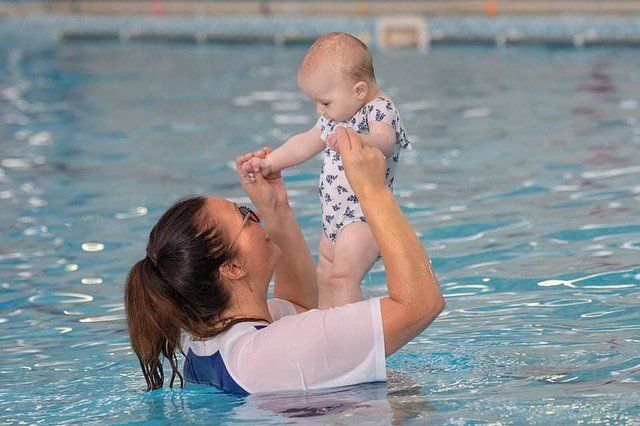
BABY SWIM
Baby swimming lessons for you & your child.
Swimming is an activity that is accessible for everyone, regardless of age.
Babies can feel at ease in the water, as long as they feel safe.
Our baby swim lessons give you and your baby the opportunity to explore the fun and joy of being in water.
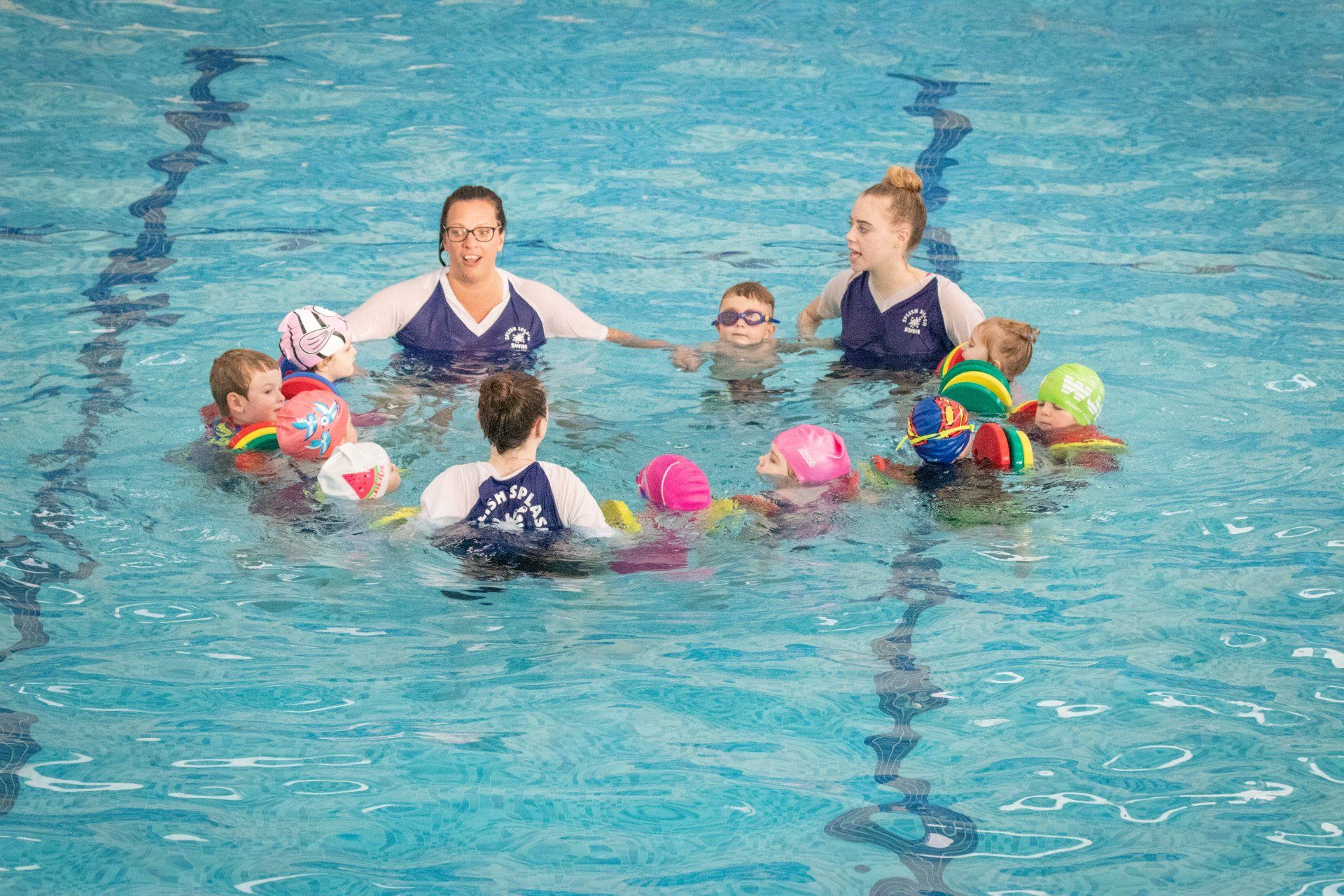
PRE-SCHOOL SWIM & STAGE 1
Swimming lessons for children before they reach school age, from 3 years old upwards.
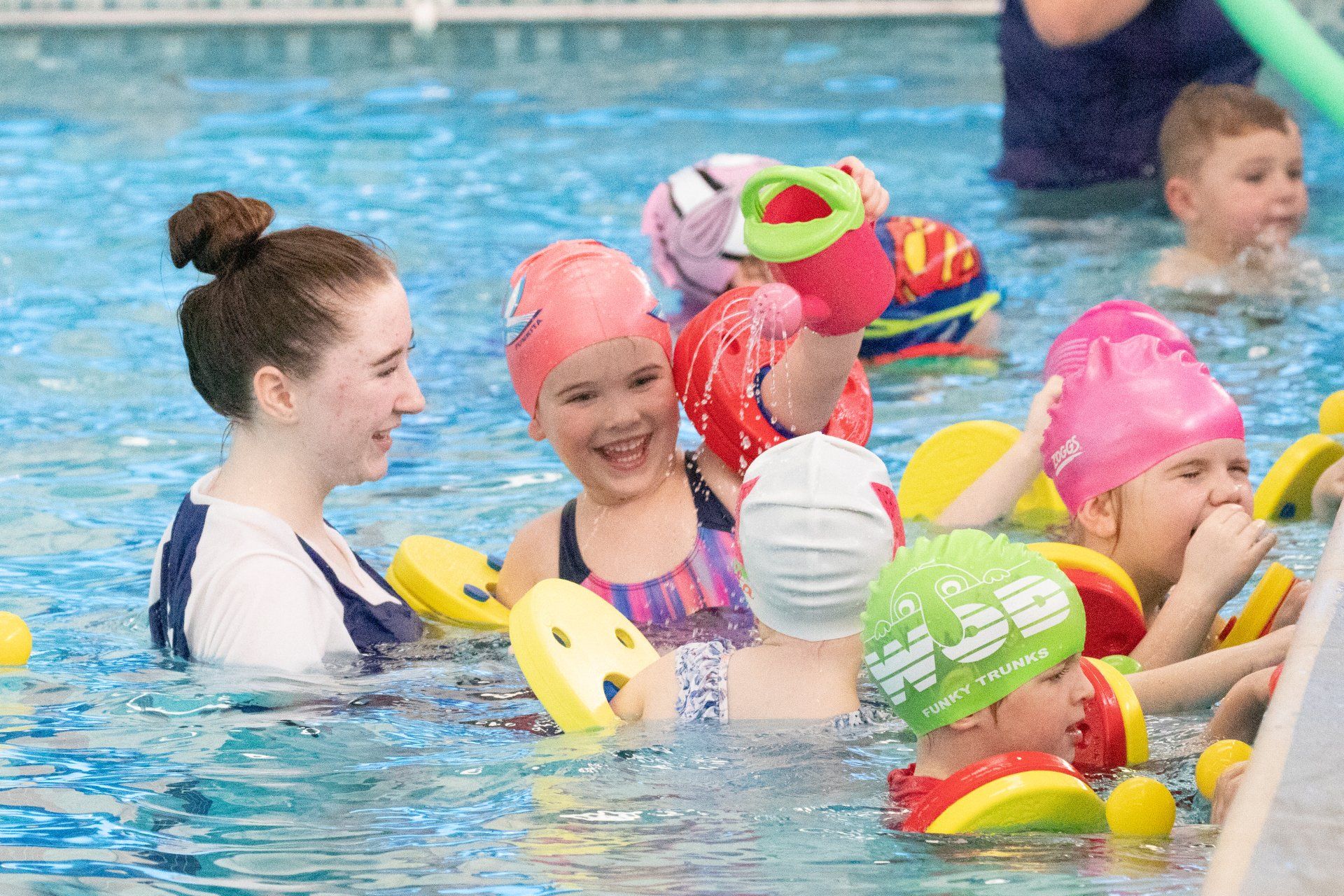
We offer swimming lessons to pre-school children, for those that have very little or no water experience.
Our pre-school stage encourages children to move independently in the water, under close supervision by our qualified Swim England teachers. We teach safe entry, introduce water being showered over the head, floating, push and glides and independent movement. We help children with underwater confidence and teach them basic aquatic breathing techniques.
Through games and play, we teach movement literacy skills: agility, balance, coordination, speed, running, jumping, throwing, kinaesthetics, gliding, buoyancy, striking with the body, catching, passing, kicking and striking with an implement.
Stage 1 swimming lessons ran every day of the week
Stage 1 lessons are for children with very little or no water experience.
Whilst closely supervising swimmers, our Stage 1 teachers encourage independent movement. We teach safe entry, introduce water being showered over the head, floating, push and glides and movement skills.
We help children develop underwater confidence and basic breathing techniques. Through games and play we teach movement literacy skills: agility, balance, coordination, speed, running, jumping, throwing, kinaesthetics, gliding, buoyancy, striking with the body, catching, passing, kicking and striking with an implement.
To complete Stage 1 swimmers must be able to:
- Enter the water safely.
- Move forward for a distance of 5 metres, feet must be off the floor
- Move backwards for a distance of 5 metres, feet must be off the floor,
- Move sideways for a distance of 5 metres, feet must be off the floor.
- Scoop the water and wash the face.
- Be comfortable with water showered from overhead.
- Move from a flat floating position on the back and return to standing.
- Move from a flat floating position on the front and return to standing.
- Push and glide in a flat position on the front from a wall.
- Push and glide in a flat position on the back from a wall.
- Give examples of two pool rules.
- Exit the water safely.
STAGE 2
Teaching independence & encouraging confidence in the water
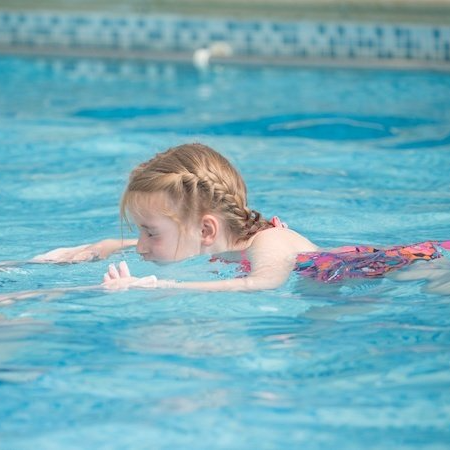
Our Stage 2 swimmers should have progressed from Stage 1 or have basic water confidence skills and be able to move forwards and backwards in the water. In Stage 2 lessons, swimmers learn how to jump into the pool safely and continue to build on skills learned in Stage 1.
They will be able to submerge completely and blow bubbles under the water, they will gain more independence travelling in the pool, learn basic horizontal and vertical rotations and work on their push and glides.
To complete Stage 2 swimmers must be able to:
- Jump in from poolside safely.
- Blow bubbles a minimum of three times rhythmically, with nose and mouth submerged.
- Move from a flat floating position on the back and return to standing without support.
- Move from a flat floating position on the front and return to standing without support.
- Push from a wall and glide on the back – arms can be by the side or above the head.
- Push from a wall and glide on the front with arms extended.
- Travel using a recognised leg action with feet off the pool floor on the back for 5 metres, without the use of floatation equipment.
- Travel using a recognised leg action with feet off the pool floor on the front for 5 metres, without the use of floatation equipment.
- Perform a tuck to rotate from a flat floating position on the front, to a back floating position, then return to standing.
- Perform a tuck to rotate from a flat floating position on the back, to a front floating position, then return to standing.
- Perform a log roll from the back to the front.
- Perform a log roll from the front to the back.
- Exit the water without support
STAGE 3
Lessons for children that want to move further in the water & improve their stroke technique
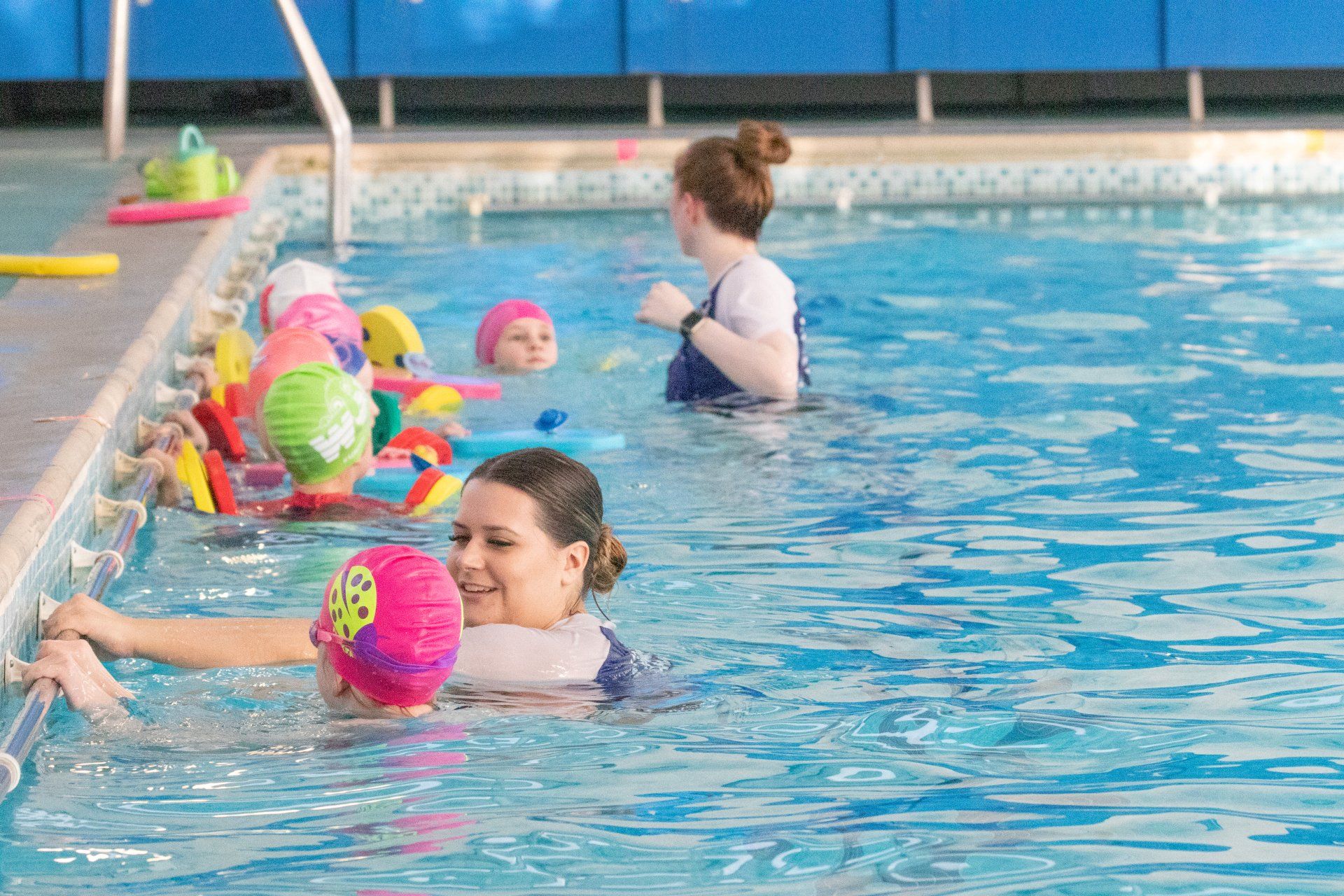
Our Stage 3 swimmers should either have progressed from Stage 2 or can swim a minimum distance of 5m on their front or back without any buoyancy aids. In this stage, children will be taught how to improve their technique to swim further in the water.
Swimmers will continue to develop their push and glides in this stage by being taught the importance of streamlining and log rolling.
Swimmers will be able to fully submerge to pick up an object and answer three questions on the Water Safety Code.
To complete Stage 3 swimmers must be able to:
- Jump in from poolside and submerge.
- Sink, push away from wall and maintain a streamlined position.
- Push and glide on the front with arms extended and log roll onto the back.
- Push and glide on the back with arms extended and log roll onto the front.
- Travel 5 metres on the front, perform a tuck to rotate onto the back and return on the back.
- Fully submerge to pick up an object.
- Correctly identify three of the four key water safety messages.*
- Push and glide and travel 10 metres on the back.
- Push and glide and travel 10 metres on the front.
- Perform a tuck float and hold for three seconds.
- Exit the water without using steps.
STAGE 4
Looking for your child to improve their technique?
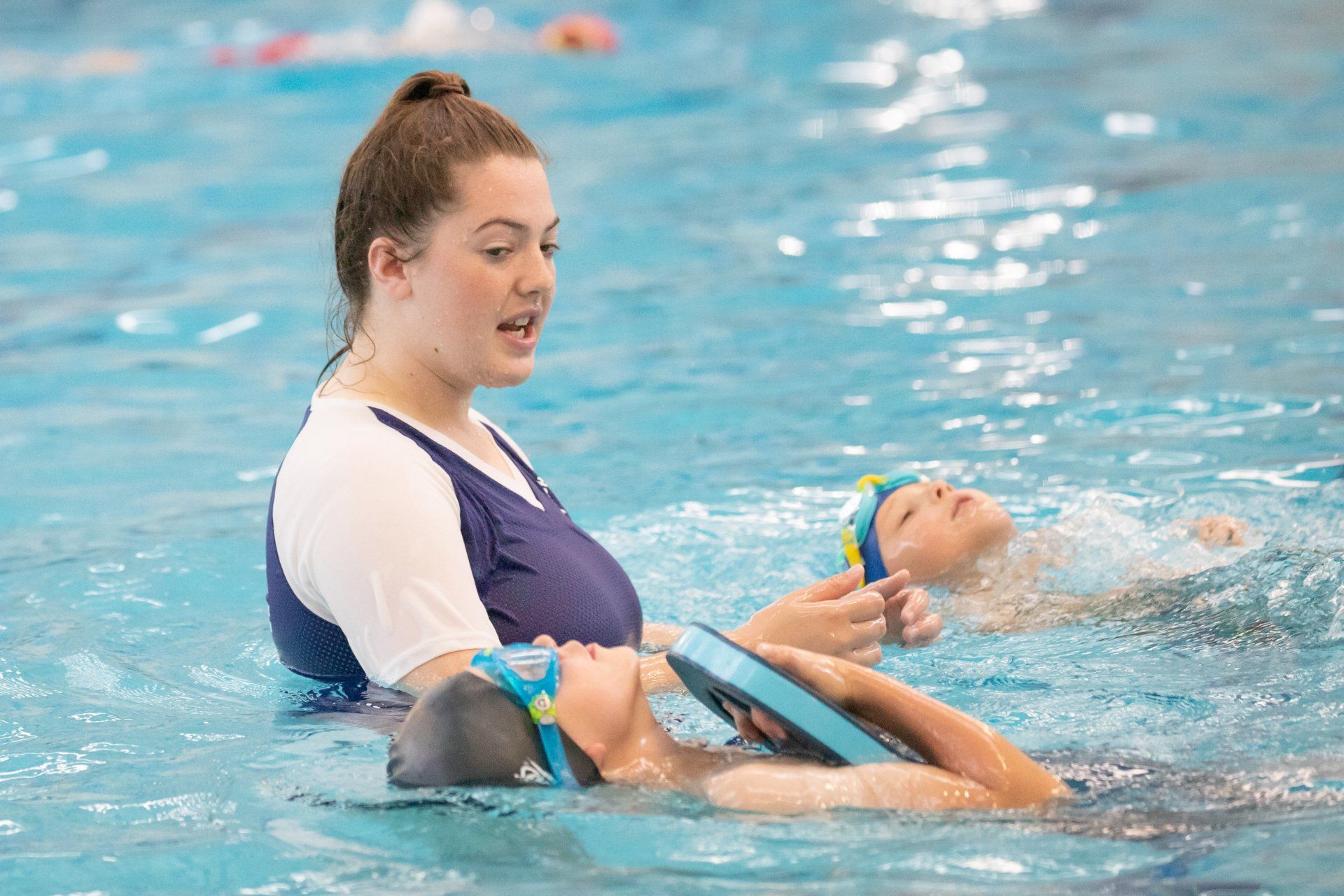
Our Stage 4 swimmers should have either progressed from Stage 3 or can swim a minimum distance of 10 m on their front and back, without buoyancy aids and be able to swim in deep water. Your child should be able to demonstrate good front crawl and backstroke technique and have been introduced to the butterfly and breaststroke strokes. At this stage, swimmers will feel confident swimming in all pool depths and be able to demonstrate an understanding of buoyancy.
In Stage 4 classes, your child will learn the importance and correct technique for fundamental shapes in the water and will master push and glides from the wall to the pool floor. Swimmers will start to develop their butterfly and breaststroke stroke techniques: by the end of the stage, they will be competent enough to kick for 10 m using both butterfly and breaststroke kick techniques. Your child will be taught the importance of sculling as a key concept for further stroke development, and will be reminded about the significance of safety in the water.
To complete Stage 4 swimmers must be able to:
- Perform a sequence of changing shapes (minimum of three) whilst floating on the surface and demonstrate an understanding of floating.
- Push and glide from the wall towards the pool floor.
- Kick 10 metres backstroke (one item of equipment optional).
- Kick 10 metres front crawl (one item of equipment optional).
- Kick 10 metres butterfly on the front or on the back.
- Kick 10 metres breaststroke on the front (one item of equipment optional).
- Perform a head first sculling action for 5 metres in a flat position on the back.
- Travel on back and log roll in one continuous movement onto front.
- Travel on front and log roll in one continuous movement onto back.
- Push and glide and swim 10 metres, choice of stroke is optional
STAGE 5
While improving stroke technique, classes teach more complex water skills in preparation for the next stage
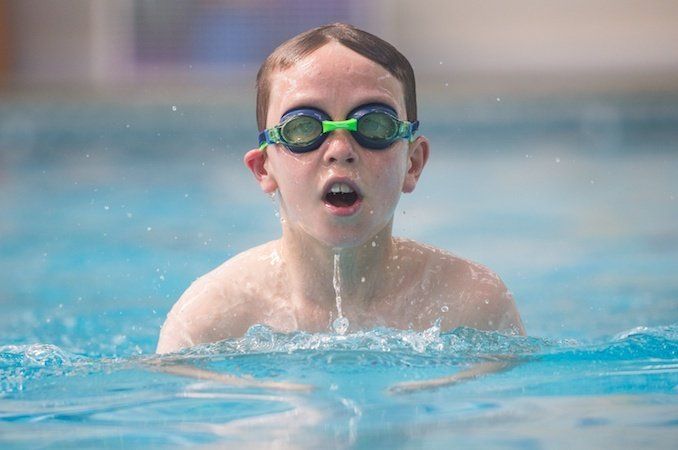
Our Stage 5 swimmers should have progressed from Stage 4 or can swim a minimum distance of 25 m front crawl and 25 m backstroke. Swimmers need to be able to demonstrate that they can kick for 10 m using breaststroke kick and using butterfly kick. Swimmers should be able to demonstrate the ability to maintain a basic stroke technique in all depths of the pool.
In our Stage 5 classes, the teacher will work with swimmers to improve stroke technique in all four strokes. Your child’s water skills will be developed as they learn to tread water, swim through hoops and perform a stationary scull, head first and feet first scull. Your child will learn how to execute a handstand and forward somersault in the water, and they will be able to demonstrate an action for getting help.
To complete Stage 5 swimmers must be able to:
- Perform a flat stationary scull on the back.
- Perform a feet first sculling action for 5 metres in a flat position on the back.
- Perform a sculling sequence with a partner for 30-45 seconds to include a rotation.
- Tread water for 30 seconds.
- Perform three different shaped jumps into deep water.
- Push and glide and swim 10 metres backstroke (performed to Swim England expected standards).
- Push and glide and swim 10 metres front crawl (performed to Swim England expected standards).
- Push and glide and swim 10 metres breaststroke (performed to Swim England expected standards).
- Push and glide and swim 10 metres butterfly (performed to Swim England expected standards).
- Perform a handstand and hold for a minimum of three seconds.
- Perform a forward somersault.
- Demonstrate an action for getting help.
STAGE 6
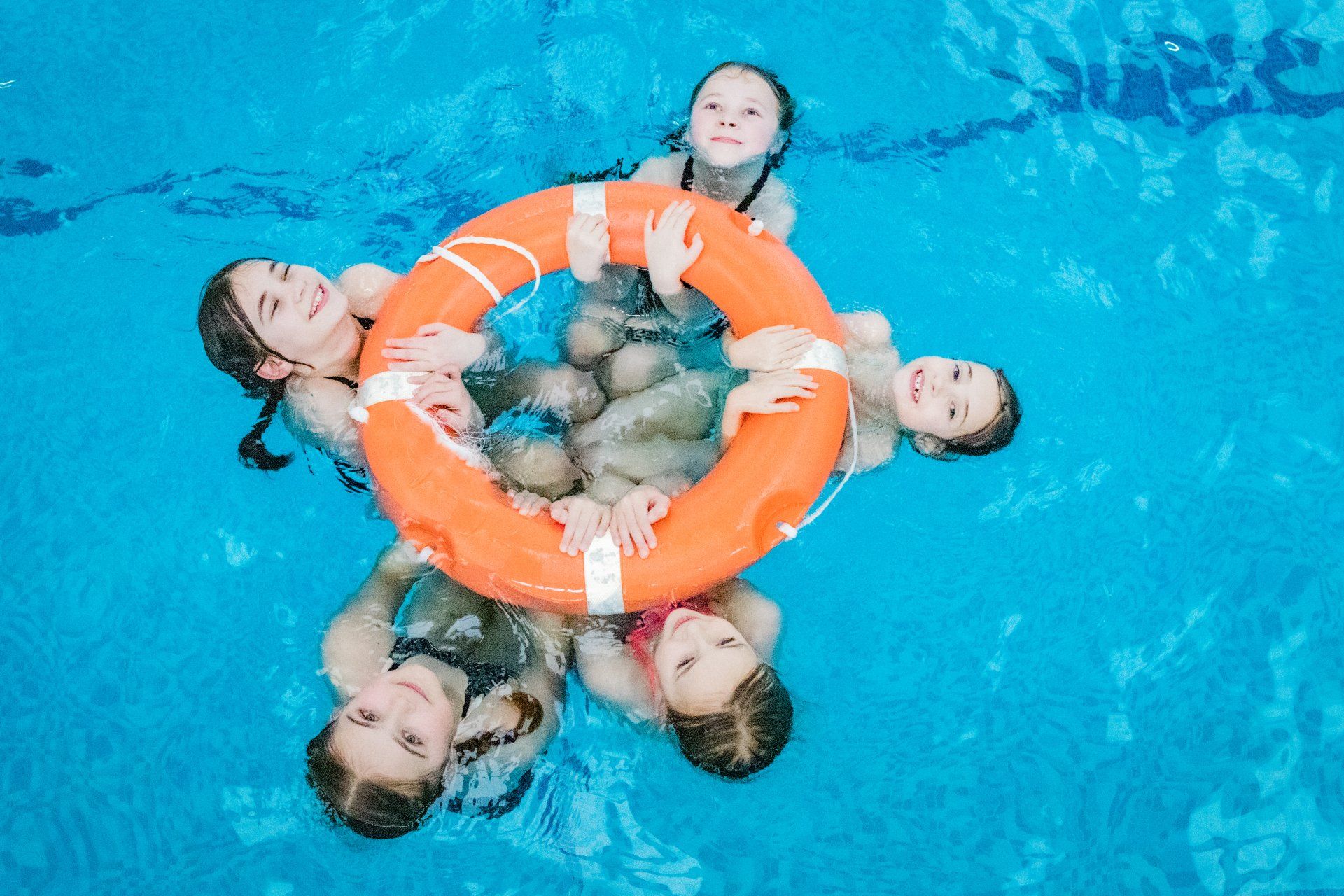
Lessons for children to develop stroke technique & stamina in the water, as well as learn personal survival skills.
Our Stage 6 swimmers should have progressed from Stage 5 or can swim a minimum distance of 100 m front crawl and backstroke, 25 m breaststroke and have basic stroke technique of butterfly. They should be able to demonstrate the above strokes and distances in all depths of the pool.
Our Stage 6 teachers will introduce a variety of stroke drills for all four strokes into lessons to improve technique and stamina in the water. Swimmers will learn transferable skills about the preparation for exercise and practice swimming with clothes on. In this stage, teachers will look more closely at personal survival skills and go into more detail about situations in which they might be used.
To complete Stage 6 swimmers must be able to:
- Give two examples of how to prepare for exercise and understand why it is important.
- Sink, push off on side from the wall, glide, kick and rotate into backstroke.
- Sink, push off on side from the wall, glide, kick and rotate into front crawl.
- Swim 10 metres wearing clothes.
- Push and glide and swim front crawl to include at least six rhythmical breaths.
- Push and glide and swim breaststroke to include at least six rhythmical breaths.
- Push and glide and swim butterfly to include at least three rhythmical breaths.
- Push and glide and swim backstroke to include at least six regular breaths.
- Push and glide and swim 25 metres, choice of stroke is optional (performed to Swim England expected standards).
- Perform a ‘shout and signal’ rescue.
- Perform a surface dive.
STAGE 7
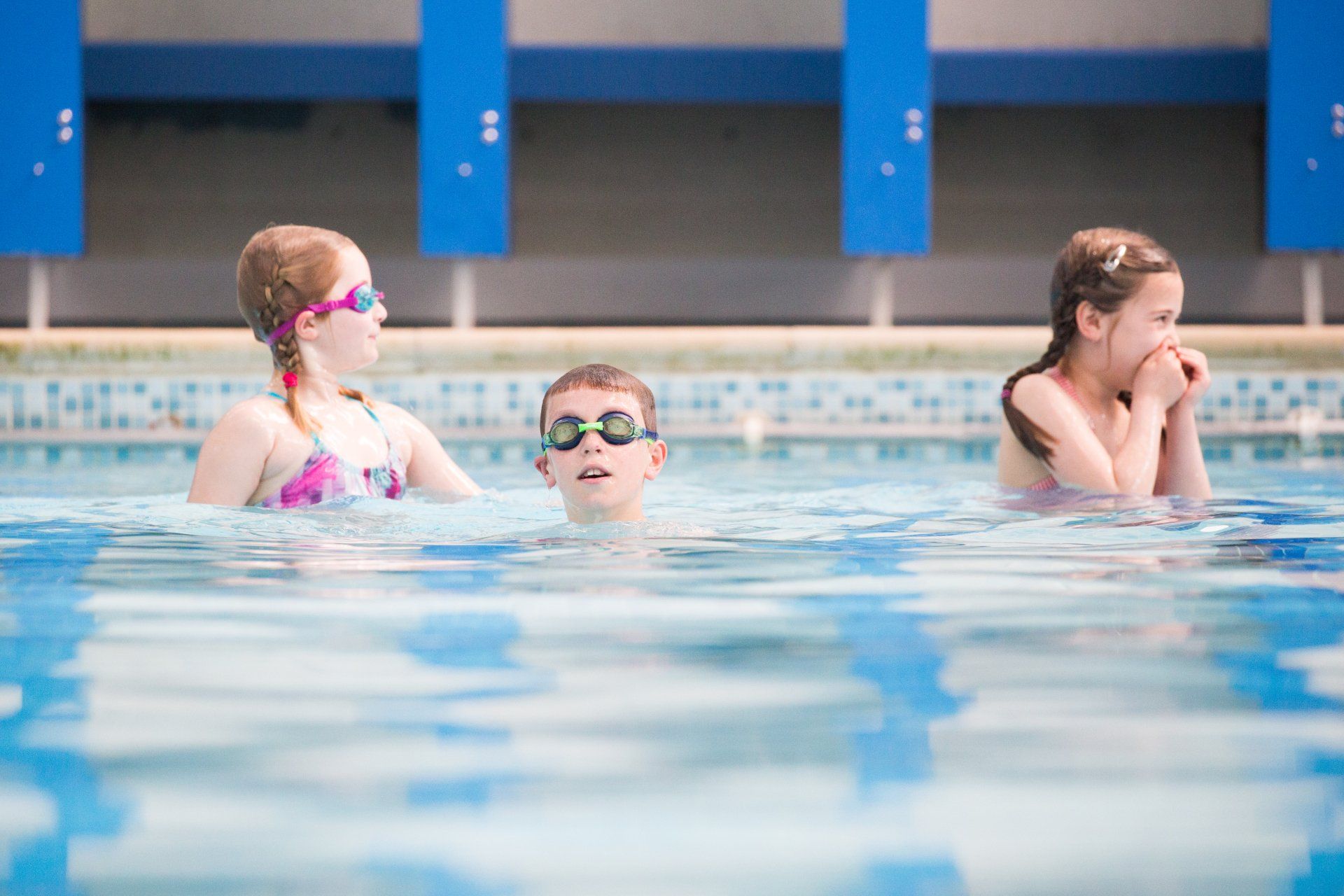
Helping children develop strength, speed & stamina. Emphasising the importance of diving, personal survival skills & looking out for others.
Our Stage 7 swimmers should have progressed from Stage 6 or be able to swim a minimum distance of 100 m front crawl, backstroke and breaststroke and swim at least 50 m butterfly with basic technique.
In our Stage 7 classes, swimmers will build upon their previous stroke knowledge and improve technique, stamina, and strength; speed will be increased and there will be an emphasis on learning to dive. Swimmers will learn more about personal survival skills and how to look out for others.
To complete Stage 7 swimmers must be able to:
- Push and glide and swim 25 metres backstroke (performed to Swim England expected standards).
- Push and glide and swim 25 metres front crawl (performed to Swim England expected standards).
- Push and glide and swim 25 metres breaststroke (performed to Swim England expected standards).
- Push and glide and swim 25 metres butterfly (performed to Swim England expected standards).
- Perform a movement sequence (linking skills with strokes and sculls) of one minute duration, in a group of three or more, incorporating a number of the following skills:
Sculling: head first, feet first
Rotation: forward or backward somersault, log roll
Floating: star on the front or on the back, tuck float, create own
Eggbeater: Moving, lifting one or both arms out of the water - Perform a sitting dive or dive.
- Push and glide and swim 50 metres continuously using one stroke (performed to Swim England expected standards).
- Push and glide and swim 100 metres, using a minimum of three different strokes (performed to Swim England expected standards).
- Tread water using eggbeater action for 30 seconds.
- Complete an obstacle course (using minimum of four objects) with feet off the pool floor throughout.
WHAT'S NEXT?
Once swimmers have completed all seven stages of the Swim England's National Plan for Swimming, they can progress and expand their swimming journey by enrolling onto one of the advised exit routes, which include Rookie Lifegaurd, Pre Competitive Swimming, Diving, Artistic Swimming or Water Polo.
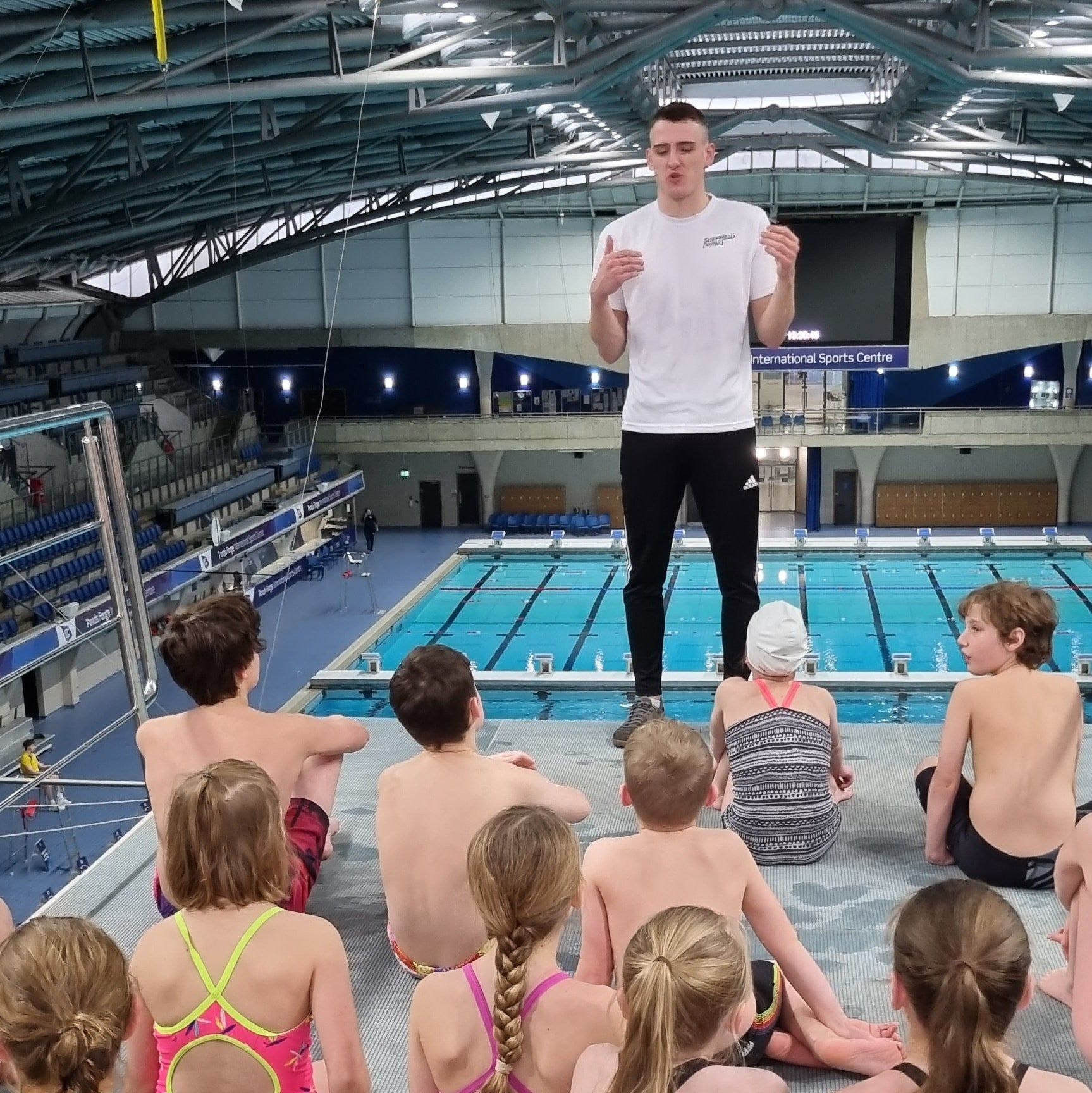
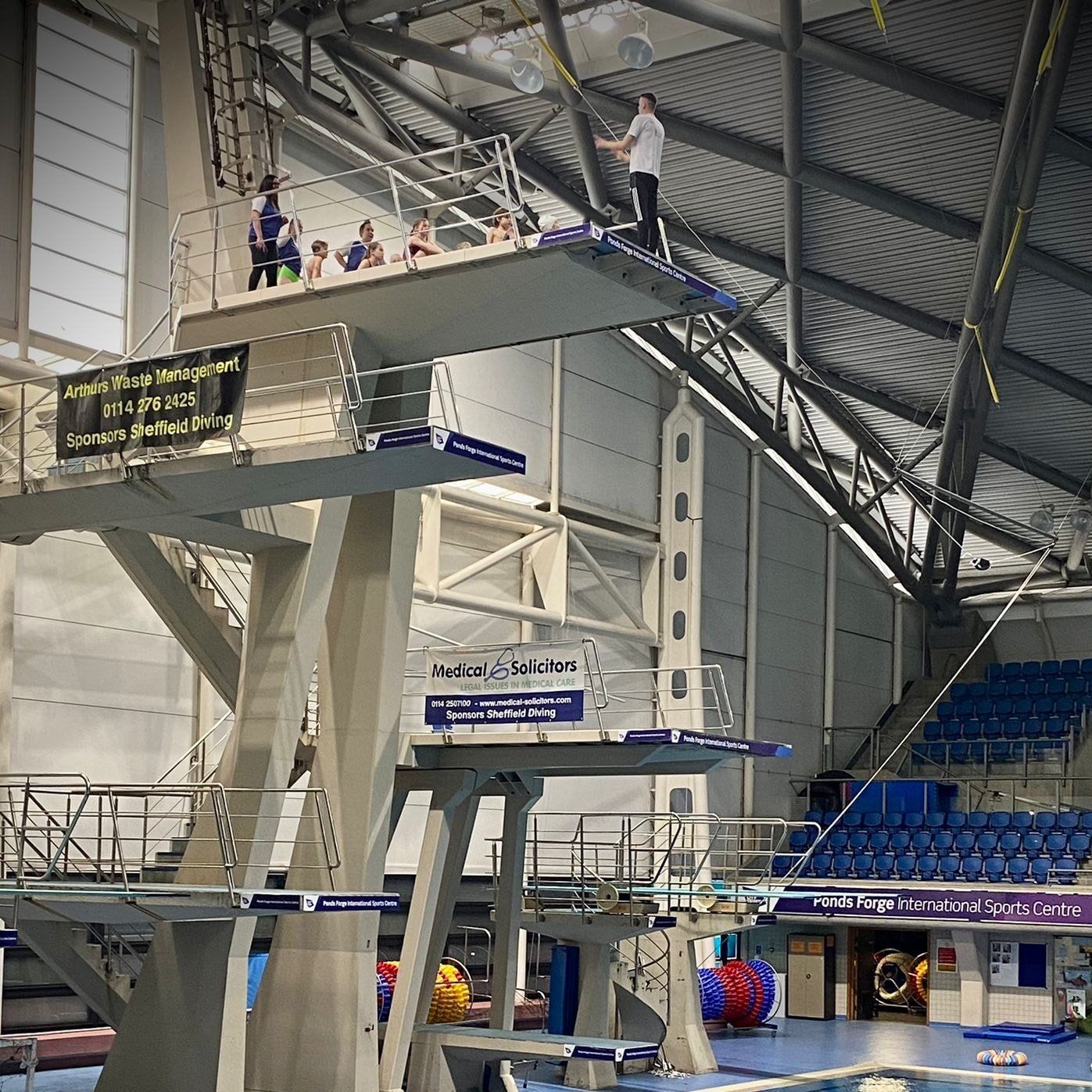
For those swimmers who fancy something a little different and exciting, or want to be the next Tom Daley, we recommend City of Sheffield Diving for taster sessions into High Board Diving.